June 5, 2026
Should Startups Use AI to Screen Job Applicants in 2026?
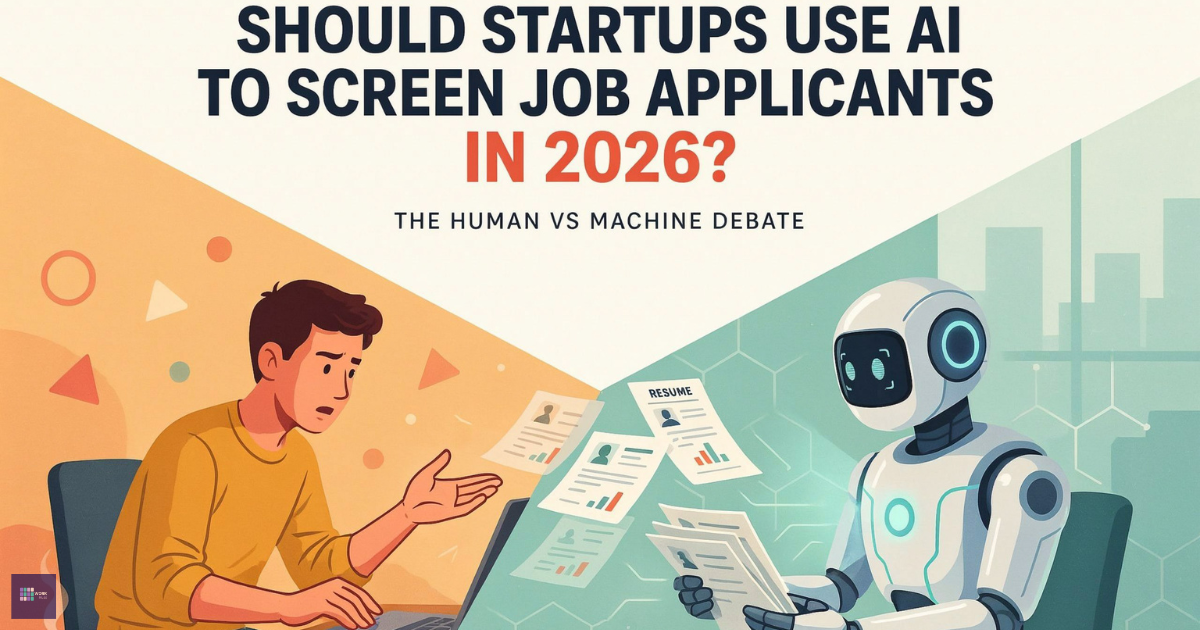
Absolutely. We encourage startups to use AI to screen job applicants in 2026, but with clear boundaries in place. AI screening job applications saves small teams dozens of hours by automatically ranking candidates, parsing resumes, and filtering applicants based on skills and experience. For a lean startup without a dedicated HR team, that efficiency is genuinely game-changing.
However, AI works best as a smart first filter, not a final decision-maker. Tools like Greenhouse, Workable, and HireVue can cut your time-to-hire significantly. But the important thing is that the human judgment must stay in the loop to catch bias, spot potential, and make the final call that actually builds a great team.
If you’re a new business looking to attract top talent, start by building an online presence and brand credibility. Work Hues helps HR companies and startups build digital authority through expert content and web development services. Contact us here to learn more about how we can help.
AI screening job applications isn’t just about scanning resumes for keywords anymore. Modern systems use natural language processing and machine learning to assess writing patterns, career trajectory, and even cultural fit signals. They read between the lines in ways that older applicant tracking systems never could, connecting dots across LinkedIn profiles, portfolios, and work history in seconds.
The leap between 2024 and 2026 tools is genuinely striking. Today’s platforms integrate directly with LinkedIn, GitHub, and portfolio sites to build a holistic candidate picture. Startups especially benefit here because they typically don’t have a full HR department to review hundreds of applications manually.
Job seekers aren’t just passive targets of AI screening job applications; they’re fighting back with their own tools. Platforms like Jobscan, Teal, and Resume Worded help candidates mirror the exact keywords in a job description, format resumes for ATS-optimized parsing, and craft cover letters that actually get read. It’s a smart strategy and, when done right, it genuinely works.
However, the arms race is real. As employer-side AI gets sharper, it’s also getting better at detecting over-polished, AI-generated applications. Hiring managers in 2026 expect candidates to use AI as a drafting assistant, not a ghostwriter. Remember, your authentic voice still matters. Use AI to sharpen your message, not replace it entirely.
This is the ethical debate every job seeker is quietly having right now. Most hiring managers expect some level of AI assistance in 2026. What they don’t want is a cover letter that reads like it was written by a chatbot with no personality. So, what should you do instead? Use AI to draft and refine, then do a final human pass. Make it sound like you. Candidate authenticity remains your biggest competitive edge, and ethical job search practices will only become more important as employers get more tech-savvy.
Employers have some genuinely powerful options. HireVue analyzes video interviews for communication patterns. Greenhouse AI offers structured hiring with predictive hiring software scoring. Paradox’s Olivia chatbot handles candidate communication automatically, cutting time-to-hire dramatically. Workday AI ties recruitment into broader HR workflows for larger teams. These tools don’t just screen; they actively reshape how companies experience the entire hiring funnel.
On the candidate side, the toolkit is rich and affordable. Here’s a quick breakdown of the top options:
| Tool | Best For | Key Feature | Free Plan |
| Jobscan | ATS Keyword Matching | Resume score against job description | Yes |
| Teal | Job Tracking + Resume Tailoring | AI customization per application | Yes |
| Resume Worded | Resume quality feedback | Line-by-line AI suggestions | Limited |
| HireVue | Video Screening | Behavioral AI interview analysis | No |
| Paradox (Olivia) | AI Assistant / Automation | Conversational recruiter chatbot | No |
| Greenhouse | Structured Hiring | AI candidate scoring + DEI tools | No |
Let’s talk about the elephant in the room. AI hiring bias is documented, real, and legally dangerous. Did you know that Amazon scrapped its own internal AI recruiting tool after discovering it systematically downgraded resumes from women? Hence, scraping it out was definitely a great move by the company. Studies have shown that some screening algorithms penalize candidates based on their zip code, university prestige, or even the font used in their resume. These aren’t edge cases. They’re systemic risks baked into tools that millions of companies are deploying right now.
For candidates, the risk runs in a different direction. Over-relying on job application optimization tools produces generic applications that feel hollow, and experienced recruiters spot them immediately. When every resume uses the same Jobscan-optimized template and every cover letter hits the same AI-generated talking points, the result is recruiter frustration. Your personal branding job search strategy has to go deeper than keyword stuffing to stand out in 2026.
The golden rule of responsible AI hiring is simple: AI handles volume, humans handle judgment. Use AI to surface the top 10–15% of applicants, then hand the shortlist to a human who can assess fit, potential, and culture in ways no algorithm can. Never let an AI tool make a final rejection decision without a human review step. That one policy alone reduces both bias risk and legal exposure significantly.
For job seekers, the strategy is equally clear. Begin by researching whether the company you’re applying to uses AI screening; many now disclose this in their job postings. If they do, ATS-optimize your resume for that first filter, then bring your authentic self to every human touchpoint after. The winning approach in 2026 is AI-informed but human-driven. Candidates who understand both sides of the screening equation have a massive advantage.
Before any startup or HR team flips the switch on an AI screening tool, there’s a non-negotiable checklist to work through.
This HR AI implementation framework isn’t just best practice; it’s increasingly becoming a legal standard.
Getting talent acquisition strategies right is important yet challenging for most startups and small businesses. The adoption of AI hiring technology isn’t uniform. Tech roles face the heaviest AI screening, with some companies running fully automated first rounds before a human speaks to anyone. Healthcare and finance are adopting AI more cautiously due to regulatory scrutiny. Creative industries such as design, writing, and marketing still lean heavily on humans, largely because AI struggles to evaluate portfolio work and creative judgment. Research states that 87% of companies now use some form of AI in their recruitment industry workflow.
Startups are doing something particularly interesting with these tools. They’re using AI screening job application technology to punch above their weight, attracting and processing candidate pools that would otherwise overwhelm a small team. Remote-first companies rely on it even more, since global applicant pools can generate thousands of submissions for a single role. The competitive advantage isn’t just efficiency. It’s the ability to move faster than larger, slower-moving enterprises.
AI screening job applications will only become more powerful, more widespread, and more scrutinized in the years ahead. The companies that get it right, using AI responsibly, auditing for bias, and keeping humans in the loop, will build hiring processes that attract better talent. The ones that hand the wheel entirely to an algorithm are one viral rejection story away from a reputation crisis.
Use AI as the smart first filter, as it was designed to be. Then let your people do what AI can’t: see potential, make judgment calls, and build a team that actually wins.
Keen on building a team with the best talent? Begin by creating a trusted brand name and positive online presence. Work Hues helps HR companies and startups build digital authority through expert content and web development services. Contact us here to learn more about how we can help.
Mirror the exact keywords from the job description in your resume and use a clean, ATS-friendly format. Tools like Jobscan help you match your application to what the AI screening algorithm is actively looking for.
Yes, many employers now use AI detection tools to flag generic, over-polished applications. Writing in your own voice and doing a human review pass before submitting significantly reduces that risk.
Absolutely. Using AI to draft, refine, and optimize your resume or cover letter is widely accepted in 2026. Just treat it as a writing assistant, not a ghostwriter, so your authentic voice still comes through.
Yes, over 75% of Fortune 500 companies and a growing number of startups now use AI screening job application tools like HireVue, Greenhouse, and Paradox to filter candidates before a human ever reviews the shortlist.
An ATS (Applicant Tracking System) manages job applications and screens candidates during the hiring process. A CRM (Candidate Relationship Management) system nurtures relationships with potential hires over time – think of ATS as the filter and CRM as the follow-up.