March 11, 2026
Talent Acquisition: A Comprehensive Guide for 2026

Building a great company starts with hiring the right people. But finding those people takes more than posting a job and hoping for the best. That’s where talent acquisition comes in. It’s a smart, strategic approach to attracting, identifying, and securing top performers for your organization.
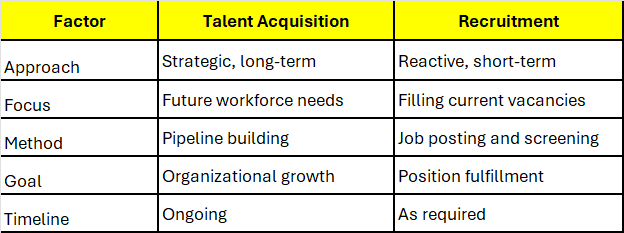
Unlike traditional recruitment, talent acquisition thinks ahead. It anticipates workforce planning needs, closes skill gaps, and builds a talent pipeline long before a vacancy appears. U.S. companies that invest in a strong talent acquisition strategy consistently outperform those that don’t. They hire better, retain longer, and grow faster. If you want a winning team, it all starts here.
People often ask, what is Talent Acquisition? Simply put, it’s the strategic process of finding, attracting, and hiring the right people for your organization. It goes far beyond posting jobs and waiting for applications to roll in. It’s a long-term, proactive approach to building a workforce that drives long-term growth.
Think of it this way. Recruitment is like calling a plumber when your pipe bursts, but talent acquisition is installing a maintenance system, so the pipe never bursts at all. It’s about anticipating your staffing needs before they become urgent and staying ahead of the curve in a fiercely competitive job market.
Most people use these two terms interchangeably without realizing that they differ in nature. Recruitment is reactive. It kicks in when there’s a vacancy. Talent acquisition, on the other hand, runs actively in the background, building relationships and nurturing a talent pool long before a position opens up.
According to the Society for Human Resource Management (SHRM), the cost of replacing an employee can range from 50% to 200% of their annual salary, depending on their position and level. What does this mean for businesses? It means that getting your hiring process right the first time is extremely important. A strong talent acquisition approach reduces costly turnover, strengthens employee retention, and builds a workplace culture that attracts and builds employee loyalty.
The Talent Acquisition process is a structured, six-step journey, with each step building on the last. Skip one, and you risk a bad hire, wasted resources, or high turnover. Follow the steps with precision, and you’ll consistently bring in people who thrive. Let’s walk through each stage to help you understand how the best companies approach hiring systematically and strategically.
Every strong hire starts with a stronger plan. Business goals alignment is the basic foundation. Talent acquisition leaders must understand what the organization is trying to achieve and what kind of talent supports those goals. Without this clarity, the recruitment process is bound to drift without direction or purpose.
As a leader, you must assess your current workforce, identify gaps, and define the skills, experience, and values required for each role. With this information in hand, you can then build a sourcing plan that targets the right channels for those specific profiles.
Candidate sourcing is where the search actually begins. The best talent isn’t always actively looking. That’s where passive job seekers come in. These are high-performing professionals who aren’t browsing job boards but would consider the right opportunity if it found them.
A multi-channel sourcing approach works best. Use LinkedIn, job boards, career fairs, recruitment agencies, and employee referrals together. Each channel reaches a different segment of your target talent pool and keeps your talent pipeline full and healthy.
Once candidates are identified, pre-employment screening filters out those who don’t meet your baseline requirements. This stage protects your organization and saves valuable time for everyone involved.
Background checks and reference checks are standard here. So is applicant evaluation through skills verification. A thorough screening process ensures that only genuinely qualified candidates advance to the next stage, saving your team hours of unnecessary interviews.
In this step, you begin with initial phone screenings, then move on to video interviews, and finally, in-person interviews for top candidates. Each round reveals something new about the candidate’s thinking, communication, and problem-solving ability.
Beyond conversation, skills assessment tools, and cognitive assessments add an objective layer to the evaluation. Some companies even use simulation exercises to see how candidates handle real-world scenarios before making a final decision.
You know that the right candidate brings in technical skills, relevant experience, and a genuine cultural fit. Don’t just hire the most impressive resume. Hire the person who will thrive in your work environment.
Once you’ve made your choice, craft a compelling job offer. Be competitive with your compensation and benefits package. Today’s candidates expect transparency, speed, and a personalized offer experience. Remember, a delay or vagueness can cost you your top pick.
Glassdoor states that 89% of employees who experienced effective onboarding felt better integrated into the company culture. This proves that a great hire can go wrong fast without a solid onboarding process. The first 90 days are critical. New employees decide whether they’ve made the right choice within their first few weeks, so make those weeks count.
Understanding talent acquisition is only half the battle. The other half is executing strategies that actually deliver results in a competitive job market. The companies winning the talent war in 2026 aren’t doing anything magical. They’re just more deliberate, more consistent, and more creative than their competitors.
Three strategies stand out among the rest: proactive pipeline building, digital channel mastery, and a high-performing employee referrals program. Together, they create a self-sustaining talent acquisition strategy that reduces time-to-hire and improves the quality of hire dramatically.
Waiting until a job opening appears to start sourcing is already too late. By the time you post the role, screen candidates, and schedule interviews, your best candidates have already accepted other offers. Proactive talent acquisition changes that dynamic entirely.
Build relationships with potential candidates before you need them. Engage your talent pipeline through LinkedIn content, industry events, and community involvement. When a role opens up, you already have warm candidates ready to move quickly through your recruitment process.
LinkedIn is the number one hiring platform in the United States for a reason. Over 200 million U.S. professionals use it actively. Beyond LinkedIn, platforms like Indeed, Handshake (for college grads), and even Instagram are becoming powerful candidate sourcing tools for forward-thinking companies.
Don’t just post job openings. Share employee stories, company milestones, and culture content. This attracts passive job seekers who aren’t actively searching but become genuinely interested after following your brand for weeks or months. Consistent digital presence is now a core part of any modern talent acquisition strategy.
Here’s something most companies overlook. Employee referrals consistently produce the highest quality hires at the lowest cost per hire. A LinkedIn study found that referred candidates are 55% faster to hire and stay 70% longer than candidates from job boards.
Structure your referral program with clear incentives. Cash bonuses, extra PTO, or recognition programs all work well. More importantly, make it easy for employees to refer. If the process is complicated, participation drops fast. Keep it simple and rewarding.
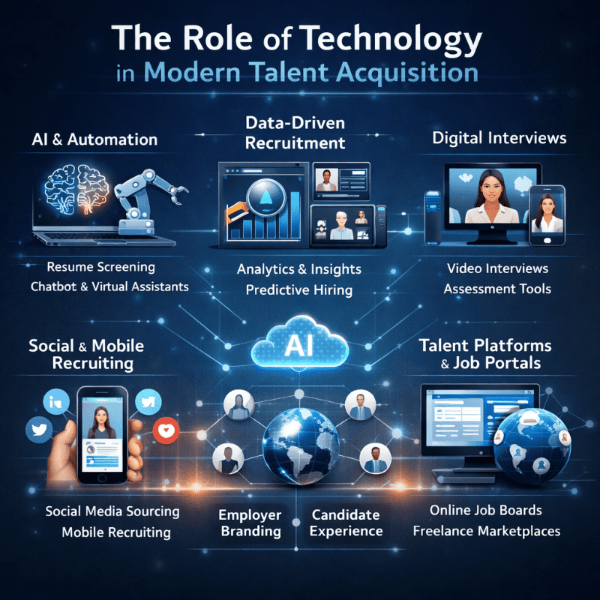
Technology has completely reshaped Talent Acquisition in 2026. Top companies pulling ahead in the talent war are leveraging smart tools that speed up their recruitment process, reduce bias, and improve the overall candidate experience dramatically.
From AI-powered sourcing platforms to automated applicant evaluation systems, technology now touches every stage of the hiring journey. Ignoring these tools means falling behind competitors who are moving faster and smarter with less effort and fewer resources.
An ATS is the backbone of any modern talent acquisition strategy. It organizes candidate information, tracks where each applicant is in the hiring process, and automates communication so no candidate falls through the cracks. Top U.S. platforms include Greenhouse, Lever, Workday, and iCIMS.
Hiring managers who use an ATS report up to 40% faster time-to-fill. The system handles pre-employment screening filters, schedules video interviews, and generates reports on key recruitment metrics automatically. It’s not just a convenience tool; it’s a competitive advantage.
Artificial intelligence is now doing things that used to take recruiters many days. AI-powered tools scan thousands of resumes in seconds, score candidates based on fit, and even predict which candidates are most likely to accept an offer and stay long-term.
Companies like Unilever and IBM use AI-driven candidate sourcing to reduce bias and improve diversity in their talent pool. Chatbots handle initial phone screenings, freeing up human recruiters to focus on relationship-building and final-stage decisions. Unlike popular belief, AI isn’t replacing recruiters; it’s making them dramatically more effective.
Even the best talent acquisition strategy runs into obstacles. The job market in 2026 is tight, fast-moving, and fiercely competitive. Understanding the most common challenges upfront helps you prepare solutions before they become costly problems.
Two challenges consistently top the list for HR teams: talent shortages in key industries and unconscious bias in hiring decisions. Both are solvable. But solving them requires intention, structure, and the right tools applied consistently through your entire recruitment process.
The U.S. Bureau of Labor Statistics reports millions of unfilled positions across tech, healthcare, and skilled trades. Skill gaps are widening faster than traditional education systems can fill them. This creates serious staffing needs for companies trying to scale quickly.
The solution? Look beyond traditional job boards and invest in upskilling your existing workforce. Partner with community colleges, coding boot camps, and trade programs. Expand your sourcing to reach passive job seekers in adjacent industries who have transferable skills your team can develop further.
Unconscious bias costs companies more than they realize. It narrows the talent pool, reduces diversity, and often results in hiring people who look like the existing team rather than people who add new perspectives and capabilities.
Structured in-person interviews with standardized questions reduce bias significantly. Blind resume screening, removing names and photos before review, is another proven method. Building diversity, equity, and inclusion (DEI) goals directly into your talent acquisition strategy ensures bias reduction becomes a system, not just an intention.
What is talent acquisition without a set of proven best practices to guide your daily decisions? It’s a strategy without execution. Here’s what successful companies practice to hire intelligently, even in the most competitive markets.
Don’t wait for a letter of resignation to start thinking about your next hire. Analyze workforce demands, business growth plans, and seasonal fluctuations at least two quarters ahead. Early forecasting keeps your talent pipeline warm, and your staffing needs manageable rather than urgent. Build a rolling 12-month hiring calendar. Review it monthly and adjust based on business changes. This one habit alone can reduce your average time-to-fill by several weeks.
Your talent pipeline should never sit empty. Engage potential candidates through LinkedIn, industry events, career fairs, and content marketing, even when you have no open roles. Send occasional updates, share company news, and keep the relationship warm.
When a role opens up, you’ll already have a list of interested, pre-qualified candidates ready to engage. That’s how top companies hire fast without sacrificing quality. It’s not luck. It’s consistent workforce planning done right.
Misaligned hiring teams make bad decisions. When recruiters, hiring managers, and department heads aren’t on the same page, candidates slip through the cracks or wrong hires get made. Business goals alignment must extend to every person involved in the recruitment process.
Hold brief kickoff meetings before each search. Define the ideal candidate profile together. Agree on interview stages, evaluation criteria, and decision timelines. When everyone moves in the same direction, the hiring process becomes faster and far more effective.
A study by CareerBuilder reveals that one bad hire costs US$17,000 on average. This cost includes lost productivity, rehiring costs, and team disruption. Rushing your talent acquisition strategy to fill a seat quickly is almost always more expensive than taking the time to get it right.
Conduct thorough background checks. Complete all reference checks. Use cognitive assessments and simulation exercises when appropriate. Give candidates time to evaluate your job offer thoughtfully. Patience in hiring pays massive dividends in employee retention and team performance.
So, what is talent acquisition in 2026? It’s the strategic engine that powers every great team in every successful company. It’s not just about filling job openings; it’s about building a talent pipeline, forecasting workforce demands, and making deliberate decisions that support long-term growth at every level of your organization.
From your talent acquisition strategy to your onboarding process, every step matters. Every hire either strengthens or weakens your team. And in today’s competitive market, there’s simply no room for guesswork or a reactive approach to your hiring process.
Talent acquisition attracts, identifies, and hires the right candidates by building a strong talent pipeline and aligning the recruitment process with long-term business goals.
No, talent acquisition focuses specifically on finding and hiring top talent, while HR covers a broader range of employee-related functions like payroll, compliance, and performance management.
Talent acquire means strategically identifying and securing skilled individuals who meet an organization’s staffing needs and contribute to its long-term growth.
In the U.S., senior talent acquisition specialists can earn up to $120,000 per year, depending on industry, location, and experience level.
Key skills include candidate sourcing, strong communication, data-driven decision-making, relationship building, and a solid understanding of workforce planning and employer branding.