March 30, 2026
Write Compelling Job Descriptions That Attract the Right Talent
The hard truth is that the majority of job posts get ignored. In today’s competitive job market, top candidates scroll fast and decide even faster. If your post doesn’t immediately speak to the right person, they’ll move on without a second thought. Knowing how to write compelling job descriptions isn’t just about listing duties and qualifications; it’s about crafting a narrative that genuinely excites the right candidate.
Every word you publish represents your employer branding that works silently around the clock. A strong post reflects your company culture, communicates real opportunity, and drives action. If done right, this transforms your entire application process and fills roles with people who actually fit. This guide covers everything you need to know to make every job post count.
Your job title and summary are the very first things a candidate sees. Sure, a title like “Marketing Ninja” may sound quirky and fun, but the truth is that it destroys your search visibility almost immediately. Stick to clear and concise titles that mirror exactly what your ideal candidate types into job search portals every day.
First impressions in top talent recruitment matter far more than most hiring managers ever realize. A sharp opening tells the candidate what the role is, what the company does, and why it’s worth their time. Your goal is to make applicants want to scroll further down.
Job seekers search using specific, familiar terms. If your title doesn’t match those terms, your post simply won’t appear in results. Titles between two and four words consistently perform best for visibility of job postings across major US job boards.
Roughly, you have about three seconds, and that’s all. Start with the role’s impact, not its task list. “Lead the team building our next $10M product” beats “Responsible for managing product development” in candidate engagement every single time. Remember, impact-first language will always take the win.
Think of your job summary like a movie trailer. It shouldn’t reveal everything; rather, it should make the reader hungry for more. A great summary covers the role’s purpose, team context, and the excitement factor, all in under one hundred words. Every word must earn its place.
Engaging job descriptions always lead with a strong summary. Candidates decide within the first paragraph whether to keep reading or bounce away. That opening section is prime real estate. Treat it that way and watch your application process attract far better-fit people from day one.
A great summary answers three questions fast: What does this role do? Who does the person work with? Why does it matter? Avoid generic openers like “We are looking for…” They waste space and signal a straightforward language failure that sharp candidates spot immediately.
The best compelling narratives in job posts make candidates feel personally called upon in the best possible way. Use first-person sentences throughout. “You’ll lead a team of five designers” lands far better than “The candidate will be responsible for team leadership.” The idea is to speak directly to them, as this creates a better connection.
Vague job requirements and responsibilities frustrate great candidates fast. They want to know exactly what their day looks like before they commit time to applying. Limit your responsibilities section to six or eight core duties. Use strong action verbs like leads, builds, drives, owns, manages, etc. Skip anything that sounds wishy-washy.
Setting clear performance expectations up front changes everything. High achievers want to know how success gets measured in their first weeks. Adding 30/60/90-day milestones signals that your company is organized and serious. It also reduces mismatched hires dramatically and protects productivity and innovation inside your team.
More is never better here. A list of twenty-five responsibilities signals a disorganized company to any smart candidate. Focus on what truly matters. Prioritize duties by how often they happen and how central they are to the role in the competitive job market right now.
Ideally, you may want to include a line like: “Within your first 60 days, you’ll independently manage client onboarding end-to-end.” Specificity like this attracts driven professionals and filters out those who aren’t ready for real accountability. Productivity and innovation genuinely thrive when expectations are crystal clear before day one even arrives.
Technical skills get candidates in the door, while soft skills keep them thriving there. By listing only the hard requirements, you’re skipping out on half the picture. A great post balances both dimensions thoughtfully. Think of it as a 70/30 split – the technical requirements carry more weight, but interpersonal traits seal the cultural fit.
Write engaging job descriptions that speak to both skill dimensions equally. A data analyst who can’t communicate insights to stakeholders is half as valuable as one who can. Your post should signal that you understand this reality. Inclusive language around soft skills also significantly broadens your pool of qualified applicants overnight.
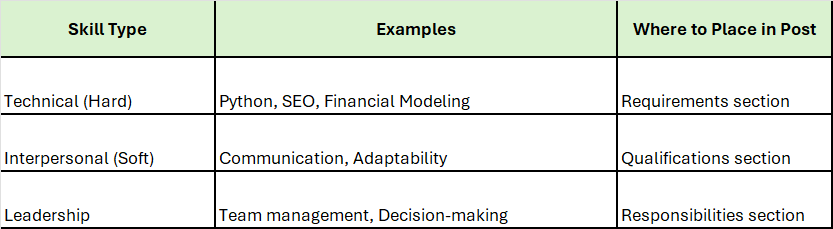
Split your skills into “must-have” and “nice-to-have” categories clearly. This simple move opens your funnel without lowering your standards at all. As per Indeed, job posts using this framework attract high-quality candidates as compared to rigid requirement lists.
Here’s the uncomfortable truth about most US job posts: inflated qualification requirements quietly kill your hiring practices before they start. Demanding 10 years of experience in a 5-year-old tech company or requiring a Master’s degree for a mid-level marketing role can send the wrong signals to your best prospects.
Harvard Business School research states that degree inflation is a substantial and growing problem in the US job market. Companies that replaced rigid credential requirements with skills-based criteria saw stronger employee retention and notably higher performance in year one. Replace “required” with “preferred” wherever you honestly can.
Overloaded qualification sections repel top performers consistently. High achievers have genuine options in today’s market. If your bar looks unreasonably high or arbitrary, they’ll apply somewhere that values their actual demonstrated skills over meaningless credentials. Keep qualifications real and relevant.
Frame qualifications as an invitation rather than a gatekeeping test. Try using sentences like, “You bring three or more years in B2B sales, and you’re ready to step into a leadership role.” This approach naturally supports cultural fit and aligns with the DEI hiring practices that forward-thinking US companies now prioritize seriously.
Seventy-seven percent of US workers consider company culture before they even apply. This single statistic should permanently change how you write every post. Reflect company culture authentically, and not with hollow buzzwords like “fast-paced” but with specific, real details about how your actual team operates daily.
Career advancement opportunities and professional development opportunities belong prominently in this section. Top talent isn’t just looking for a paycheck. They’re searching for a launchpad. Tell them about your mentorship programs, leadership development tracks, and training programs openly. That’s precisely what hooks the most ambitious candidates in any field.
Employer branding is your silent recruiter working 24/7. Candidates check Glassdoor before they apply for any opportunity. If your post reflects a work environment that matches your actual reviews, trust builds fast. Use employee testimonials and genuine examples of team dynamics to make your culture feel tangible and real.
Be ruthlessly specific here. “Our last three marketing managers earned promotions within 18 months” beats “We offer great growth opportunities” by a mile. Define career paths clearly. Talk about workshops and conferences, internal promotions, and leadership opportunities. Specificity separates memorable posts from forgettable ones every single time.
Salary transparency is no longer optional anywhere in the US. States including Colorado, New York, and California now legally require salary ranges in job postings. Beyond compliance, listings that include salary information receive up to 30% more applications. Don’t make candidates guess what the role pays. Provide information that will help them make positive decisions.
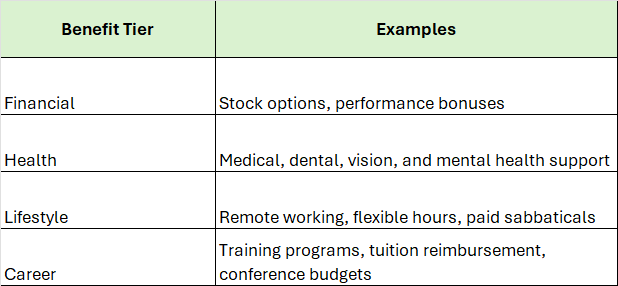
Unique benefits and work-life balance perks deserve a dedicated space in your post. Go well beyond standard health insurance and PTO mentions. Highlight career advancement, remote working flexibility, wellness programs, equity options, and learning budgets. These details speak directly to what modern US candidates genuinely prioritize when evaluating any new opportunity.
Top candidates now routinely skip posts with no salary range listed. Transparency signals confidence, maturity, and mutual respect. It also saves everyone time throughout the application process. List a realistic, honest band and briefly explain how compensation evolves with performance over time.
Google doesn’t just index websites; it indexes job posts directly, too. Google for Jobs surfaces optimized listings right inside search results without any paid promotion required. Place your target keyword in the title, first paragraph, and at least one subheading. This dramatically improves your visibility of job postings across the entire US market.
Job posting strategies built around readability matter just as much as raw SEO tactics. Dense text blocks lose readers within seconds on any device. Use short paragraphs and clear section headers throughout. Aim for 400 to 700 words for most roles. Indeed states that over 60% of US job seekers now apply directly from their phones, which means that mobile readability isn’t optional anymore.
Google’s algorithm reads your post exactly like a web page. Use natural, conversational language throughout. Include your job title early and consistently. Clear and concise writing ranks significantly better than jargon-heavy descriptions that confuse both readers and search engine crawlers simultaneously.
Interestingly, candidates read online content in an F-pattern. This means that they skim the top and left side first and then drop off quickly. Put your strongest, most compelling content at the very top. Use numbered lists for key responsibilities. Dynamic and engaging formatting holds attention and signals a modern, organized employer brand worth trusting.
AI tools are genuinely transforming how to write compelling job descriptions at scale across the US recruiting industry. Platforms like Textio, Ongig, and ChatGPT help teams draft posts faster, detect unconscious bias, and optimize tone automatically. Recruiters using AI consistently report cutting writing time by up to 50% without sacrificing quality or authenticity.
The smartest approach is the human-in-the-loop method. AI drafts the structure, and humans inject the personal touch into the content. Creative job postings still need a real, specific voice behind them to resonate with real people. That combination of AI efficiency plus human refinement consistently outperforms both fully manual and fully automated writing approaches in every test.
Textio analyzes language patterns and predicts likely hiring outcomes before you post. Ongig flags biased phrasing and suggests stronger, more inclusive replacements automatically. ChatGPT generates full drafts from a simple prompt in minutes. These tools make top talent recruitment measurably more efficient for teams of every size across the USA.
Always start your AI prompt with your company values, team size, and role impact details included. Review every single AI output carefully before publishing anything. Avoid jargon that AI naturally tends to overuse and repeat. The ultimate goal is compelling narratives, and those still require a genuine human touch to feel specific and trustworthy.
All businesses, particularly small businesses, primarily aim at developing cost-effective recruitment strategies. However, misleading job descriptions can genuinely be one of the most expensive hiring mistakes any company can make. SHRM research reports that 50% of US hourly workers leave within their first four months on the job. Many cite a clear disconnect between what the job post promised and the actual daily work environment they found.
Your job descriptions are living documents, not static files you write once and forget about entirely. Review them every quarter without fail. Use exit interview data to spot inaccuracies before they cost you another hire. Ask current employees in the role to verify that the listed duties still reflect daily reality accurately. Because at the end of the day, it is the honest posts that drive genuine employee retention.
When candidates understand exactly what they’re walking into, they stay longer and perform better. Honest job requirements and responsibilities build deep trust before day one even begins. That trust reduces early exits and protects your employer branding from damaging Glassdoor reviews that quietly scare off your next great hire.
Set a recurring quarterly calendar reminder specifically for job description audits. Pull your three highest-turnover roles first and review those posts immediately. A/B test different versions on LinkedIn and Indeed to measure which drives stronger candidate engagement over time. Treat every post like a call to action in job postings, because that’s exactly what it is.
Writing compelling job descriptions is never a one-time task. It’s an ongoing, evolving strategy that directly shapes who walks through your door. From your job title to your benefits section, every single word either attracts the right person or quietly pushes them away toward a competitor.
Start small today. Pick one section from this guide and sharpen it before you post your next role. Even refining your job title alone can completely change who applies tomorrow. How to write compelling job descriptions is a skill that pays dividends on every single hire you make. Invest in it seriously today and watch your entire talent pipeline transform in the years to come.
A good job description starts with a clear job title, a punchy summary, specific responsibilities, and honest qualifications. Keep it concise, use active voice, and always highlight what makes the role genuinely worth applying for.
The 70/30 rule means 70% of your skill requirements should focus on technical, hard skills, while 30% covers soft skills like communication and adaptability. This balance attracts well-rounded candidates without narrowing your talent pool unnecessarily.
Yes, ChatGPT can draft a solid job description in minutes when given the right prompt, including role details, company values, and tone. Always review and refine the output to ensure it reflects your company’s authentic voice.
The 5 Cs are Clarity, Competency, Culture fit, Compensation, and Commitment. Together, they create a hiring framework that helps recruiters evaluate candidates fairly and find people who genuinely thrive long-term within the organization.
A great employee shows reliability, strong communication, adaptability, a genuine willingness to learn, and consistent accountability. These traits consistently outperform raw technical skills when it comes to long-term performance and overall team success.